


The History of Feng Shui: A Journey Through Millennia
The history of Feng Shui is a fascinating journey spanning millennia and continuing to this day. Feng Shui, meaning "wind and water," originated in a time when people were still closely connected to nature and carefully studied their surroundings to ensure their families' survival. Join me on this exciting journey through the history of Feng Shui and discover how this ancient science can enrich our modern lives.
The Beginnings: Wind and Water
Imagine living in a world where the weather and landscape determined your entire existence. Thousands of years ago, people began to closely observe the elements of wind and water to improve their living conditions. Back then, they knew: fresh, clean water meant life, while still, stagnant water brought disease. A gentle, steady wind cooled and revitalized, while stormy gusts brought destruction. To protect their villages from the whims of nature, they learned to choose the best locations for their homes and fields – places that guaranteed safety, health, and abundant harvests.
The Role of Feng Shui Scholars
In this world, Feng Shui masters were highly esteemed experts whose life's mission was to study and understand the external environment. They observed the landscape, the flow of water, and the movements of the wind to determine the best habitats for their communities. Their knowledge was meticulously passed down and refined over generations until it became the foundation of Feng Shui as we know it today. Feng Shui is not a rigid science but a living system that is constantly evolving – an endless book that continues to unfold with each new chapter of our history.
Qi and the Cyclical Processes of Nature
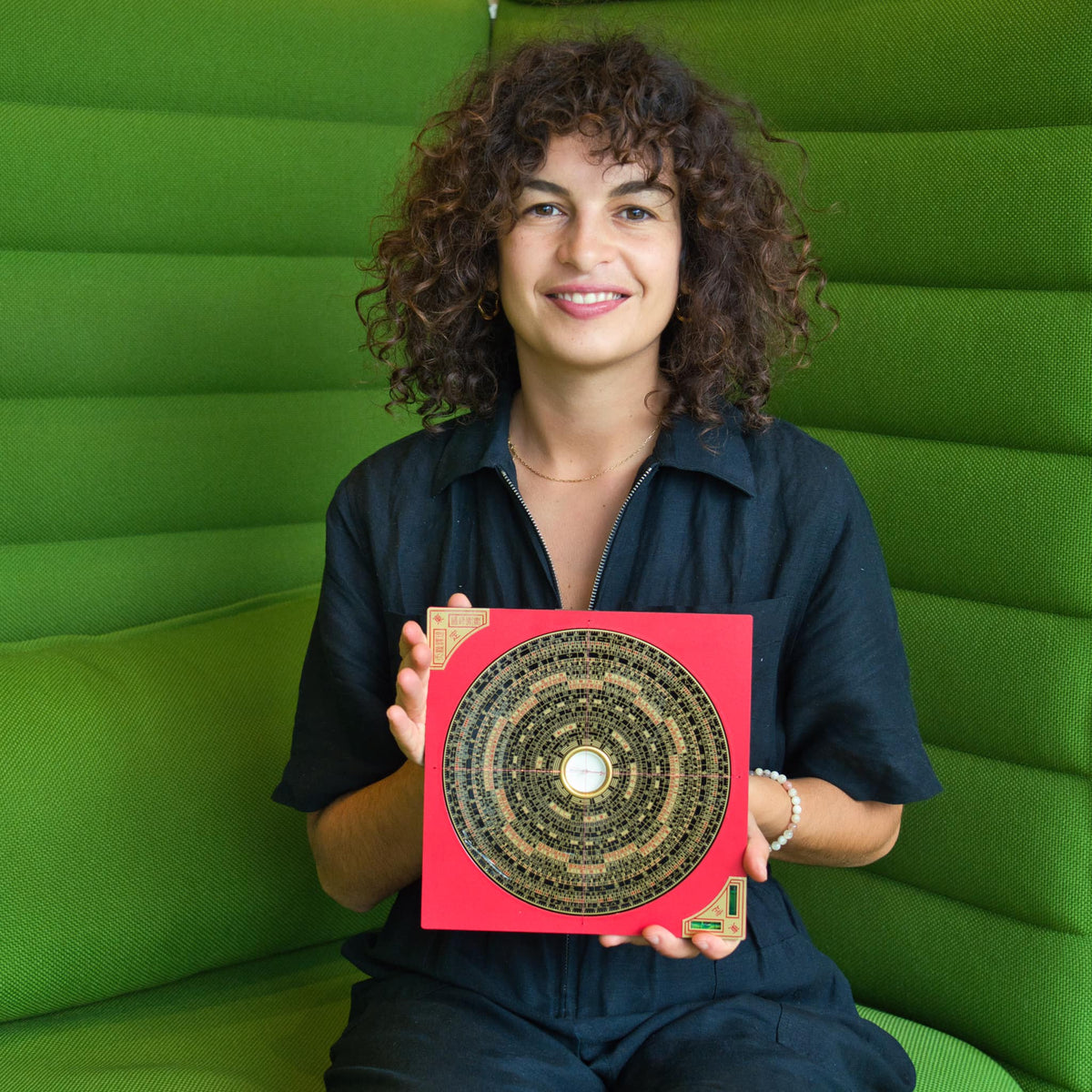
Despite technological advances and changes in our modern world, the fundamental principles of Feng Shui remain timeless. The cyclical processes of nature – the sun, moon, and cardinal directions – have retained their significance for millennia. The invisible Qi, the life energy that flows through everything, still plays a central role in Feng Shui practice. An experienced Feng Shui consultant does not rely solely on modern tools like Google Earth but uses the geomantic Feng Shui compass to determine magnetic north and precisely direct energy flows in a space.
This journey through the history of Feng Shui shows us how deeply rooted these teachings are in nature and the rhythms of life. By opening ourselves to this ancient wisdom, we can design our homes and lives in harmony with nature – and thus create an environment that supports and strengthens us.
Famous Personalities in the History of Feng Shui
Many prominent figures have contributed to the development and spread of Feng Shui. These visionaries and scholars not only shaped the fundamental principles of Feng Shui but also profoundly transformed the connection between humans and nature. Here are some of the most important milestones:
- 2800 BC – Fu Xi:
Fu Xi, one of the three mystical kings of ancient times, created the "Early Heaven Ba Gua," which serves as the basis for the "I-Ching." Fu Xi is known not only for introducing writing but also for his contributions to the development of Feng Shui principles. His work helped lay the groundwork for understanding energy flows and their influence on human life.
- 2674-2575 BC – The Yellow Emperor (Huangdi):
The Yellow Emperor, considered one of the most significant figures in Chinese history, is known as the originator of the "Huangdi Neijing." This classic collection not only describes acupuncture and acupressure but also lays the foundation for the concept of Qi, the life energy that is central to Feng Shui. His writings significantly influenced the development of traditional Chinese medicine and its integration into Feng Shui.
- 2490-2413 BC – Zhuan Xu:
The scholar Zhuan Xu introduced a unified calendar and made important contributions to astrology. His calendar helped understand and utilize time cycles, which is of great importance for Feng Shui practice, as understanding time cycles is crucial for placing objects and choosing auspicious times for important decisions.
- 2283 BC – King Yew Ti and General Yee Shin:
King Yew Ti commissioned General Yee Shin to stop the devastating floods of the Yellow River. After nine years of unsuccessful attempts, General Yee Shin was deemed incompetent and executed. His son Yee Men took over the task and eventually found a solution, inspired by the "Book of the Turtle." This knowledge led to the development of the Lo Shu Square, an important concept in Feng Shui that formed the basis for many Feng Shui practices.
- 2100-1600 BC – Xia Dynasty:
During the Xia Dynasty, the first concepts of Qi as life energy were established. Under "Xia Yu," the first dikes and canal systems were built, which not only protected against floods but also highlighted the importance of Feng Shui in landscape design and ensuring fertile agricultural land.
- 1150 BC – King Wen of the Zhou Dynasty:
King Wen developed the Ba Gua, a system of eight trigrams, and the 64 hexagrams that form the basis of the "I-Ching." These symbols are essential for Feng Shui practice as they help understand and utilize energetic patterns and their influence on the environment.
- 1144 BC – Gei Cheong:
The student Gei Cheong wrote texts about the "Later Heaven Ba Gua." These writings expanded the knowledge of Feng Shui and contributed to the further development and refinement of practices by focusing on the application of Feng Shui principles in various contexts.
- 1030-221 BC – Geomancy and the Five Elements:
During this period, geomancy focused particularly on the orientation of tombs to ensure the harmony and well-being of the deceased. The theory of the five elements and their worldview continued to develop and influenced Feng Shui practice, especially concerning the design of living and working spaces.
- 221-207 BC – Emperor Qinshi Huangdi:
Emperor Qinshi Huangdi gathered masters of natural forces at his court to use the art of divination to secure his longevity. Although many masters were executed due to a lack of results, these efforts contributed to the further spread and refinement of Feng Shui practices.
- 276-324 AD – Guo Po:
Guo Po wrote the "Zang Shu" or "Book of Burials," which is still considered a foundational work for Feng Shui experts. This book links the principles of geomancy with practical instructions for its application in the design of burial sites.
- 589-618 AD – Yang Houses and Grave Feng Shui:
During this period, Feng Shui for Yang Houses, i.e., the living spaces of the living, continued to develop. Grave Feng Shui was also considered and refined to ensure the harmony and well-being of both the living and the deceased.
- 618-906 AD – Tang Dynasty:
During the Tang Dynasty, Lee Hui Choong wrote the first work on the five elements and the 60 Jia Zi cycles. This period marked a flourishing of Feng Shui knowledge, during which new books and techniques were developed, including San Yuan Feng Shui, which considers temporal cycles on Earth.
- 960-1279 AD – Song Dynasty:
Chan Hee Yee wrote the "Chi Yun Pin," while Master Chi Mei Tao So wrote the "Purple Star Classics." These works contributed to the further development and refinement of Feng Shui techniques. Mah Yi Siong Fatt also deepened the knowledge of face reading, while Master Siew Hong Chi and Wong Kik Keng Sie Keng made significant contributions to classical Feng Shui.
- 1271-1368 AD – Calendar Science and Compass School:
The scholar Yejin Chucai refined calendar science, while Feng Shui Master Tong Deying wrote a new work on the theory of the Compass School. This period marked important advances in the application of the geomantic compass and the integration of calendar knowledge into Feng Shui practice.
- 1368-1644 AD – Officials and Landscape Observations:
Many officials turned to Feng Shui as statecraft, considering the effects of external influences such as mountains and water. This period also saw the first contact with Jesuit missionaries, including Matteo Ricci, who visited the imperial astronomical instruments and won a competition with the Chinese astrologers.
- 1659 – Ming Dynasty:
Feng Shui Master Jiang Da Hoong wrote the book "Tien Yun Ng Koh (5 Songs Classics)," which made important contributions to Feng Shui practice. Another significant work by Jiang Da Hoong, "Tei Li Pan Ching," dealt with stars, land formations, and their interactions.
- 1873 – Revision of "Tei Li Pan Ching":
Master Sam revised the book "Tei Li Pan Ching," originally by Jiang Da Hoong. His revisions and explanations helped unravel many of the book's secrets and served as a basis for many San Yuan Feng Shui practitioners.
- 1966-1976 – Cultural Revolution:
During the Cultural Revolution under Mao Zedong, many Feng Shui masters were persecuted and forced to flee China. Despite these difficult times, the knowledge survived and continued to be preserved and passed on.
The Evolution of Feng Shui
Over the centuries, Feng Shui has undergone a remarkable evolution. Especially during the Tang Dynasty (618-906 AD), knowledge of the five elements and the art of Feng Shui flourished. This era was characterized by an intense exchange among scholars who collected and recorded this knowledge in various works. These writings laid the groundwork for the systematic application of Feng Shui in architecture and urban planning.
The Song Dynasty (960-1279 AD) continued this tradition, producing significant writings such as the "Chi Yun Pin," which provided deeper insights into energy theory and the harmonization of space and people. During this time, the principles of Feng Shui were further refined and applied in practice, firmly embedding them in Chinese culture.
Challenges and Renewals
However, the history of Feng Shui has not been without its challenges. Particularly during the Cultural Revolution under Mao Zedong (1966-1976), Feng Shui experienced a dark period. During this time, the practice was branded as superstition, and many Feng Shui masters were persecuted, arrested, or even executed. These political measures led to a large part of the knowledge being lost or having to be passed on in secret.
Yet, the ancient knowledge survived this tumultuous period. In the years after the Cultural Revolution, Feng Shui experienced a rebirth and is now practiced and appreciated worldwide. This renewal shows that Feng Shui, despite all adversities, is a powerful and timeless art that constantly adapts to new circumstances and evolves.
Every day offers new opportunities to explore and apply the principles of Feng Shui. Whether in traditional form or modern interpretation – the wisdom of Feng Shui lives on and helps us shape our lives in harmony with natural energies.
Practical Application in Everyday Life
In today's fast-paced world, the principles of Feng Shui can help us consciously design our environment and unfold our greatest potential. Feng Shui is not just an ancient art but a practical tool that supports us in optimizing the energy in our home and thus improving our well-being and quality of life. Whether it's about strengthening Qi or choosing the right Feng Shui elements – the wisdom of this ancient teaching is more relevant and useful than ever.
Designing Living Spaces According to Feng Shui
Designing your living spaces according to Feng Shui principles can have a profound impact on your well-being. Imagine how your home could feel if everything is harmoniously coordinated. Start with furniture placement. Make sure the center of the room remains clear – this is the central point where Qi can flow unhindered and fill the room with positive energy. A well-designed space creates an atmosphere of peace and security, where you can fully unfold.
The Meaning of Colors and Shapes
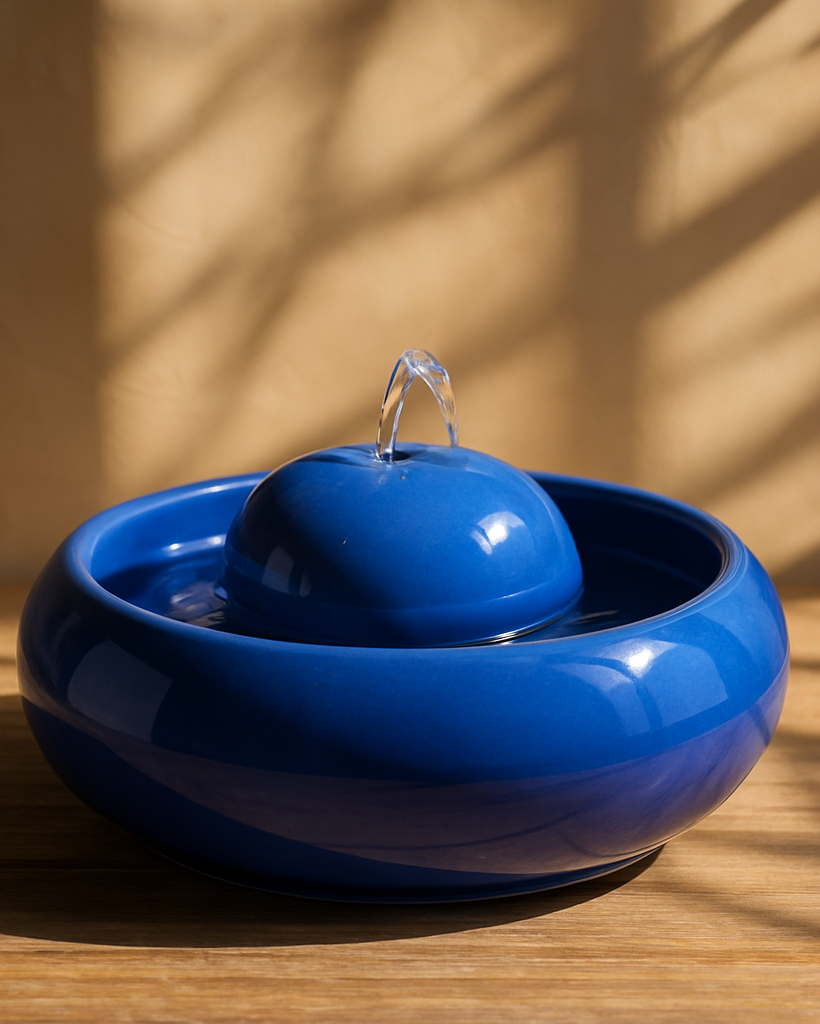
Colors and shapes play a crucial role in Feng Shui and influence the energy in your home. Each color is assigned to one of the five elements – Wood, Water, Metal, Earth, and Fire – and has a specific effect on the atmosphere in the room. Light, bright colors like soft blue or delicate green are particularly suitable for small rooms, as they visually expand the space and create a feeling of lightness. Strong colors like red or dark blue, however, can support larger rooms by radiating warmth and security. The shapes of furniture and decorative elements should also be harmoniously coordinated to promote energy flow in the room and create a balance between the elements.
The Power of Scents
Scents have a profound effect on our emotions and can significantly influence the energy in a room. Imagine a delicate lavender scent filling the air, immediately putting you in a state of calm and relaxation. Lavender soothes the senses and helps reduce stress, while refreshing citrus scents like orange or lemon fill the room with energy and freshness. Everyone has their own scent preferences, which are often unconsciously associated with positive memories and emotions. Choose scents that evoke pleasant associations and give your home a soothing atmosphere.
Order and Clarity
A tidy room not only promotes concentration but also general well-being. Clutter can block energy flow and lead to stress and restlessness. Create a workspace that is clearly structured and tidy – here it will be easy for you to focus and work efficiently. Use storage solutions to maintain order and create clear structures. A tidy home according to Feng Shui principles helps you feel comfortable and be more productive.
The Change of Time and the Constancy of Feng Shui
Over the centuries, the world has changed tremendously. Technologies have developed rapidly, societies have transformed, and new challenges have emerged. But despite these constant changes, the fundamental principles of Feng Shui remain constant and unchanged. The fundamental laws of nature and the cyclical processes of the Earth that underpin Feng Shui are timeless and remain relevant. This ancient knowledge, passed down through millennia from generation to generation, helps us find a harmonious and balanced way of life even in the modern world.
The history of Feng Shui is more than just a chronicle of events and personalities – it is a fascinating journey through the centuries that shows us how deeply rooted and valuable this ancient art of spatial design is. It reveals how our ancestors, through a deep understanding of nature and its energies, found a way to design their environment in harmony with natural rhythms.
In today's world, where we are often confronted with stress and rapid changes, Feng Shui offers us a stable foundation to harmoniously design our home and living spaces. It enables us to consciously work with the energies in our environment and increase our well-being.
If you'd like to learn more about how Feng Shui can positively influence your life, I warmly invite you to visit our Feng Shui shop. There you'll find a variety of Feng Shui elements that can help you design your home according to Feng Shui principles. Discover how small changes can have a big impact and bring harmony and balance into your life.
Read more
In a world that is spinning ever faster and constantly demanding of you, preventive measures in Feng Shui are invaluable today. The constant noise of everyday life, the hustle and bustle, and the g...

Have you ever wondered what pajamas might have to do with Feng Shui? Perhaps you're skeptical and thinking, "Pajamas and Feng Shui? That doesn't fit!" But let's take a closer look at this compariso...