


Your Personal Sanctuary: Tips for Designing Your Feng Shui Altar
In a world characterized by constant movement and countless distractions, you might ask yourself: Is it still relevant today to have an altar at home? Many of us lead hectic lifestyles. But the altar remains a source of calm and peace. And it becomes your personal retreat in your home.
Why and what do you need an altar for?
An altar can serve as a focal point to uplift your mind and heart. It can help you achieve more calm, relaxation, and meaningfulness. In the practice of Yoga, it is taught that God is in everything and can be experienced in the form of love, pure consciousness, and presence. Your altar and the aspects placed on it symbolize exactly that.
An altar is more than just a decorative element; it is a place of worship and inner contemplation. By regularly connecting with your altar, you can establish a connection to something greater and remember the higher values and goals you strive for in your life. In a world characterized by external stimuli and stress, your altar offers a retreat where you can unite with your inner peace and spiritual practice.
Creating an altar in your own home reminds you that your home is not just a physical space but also a spiritual place where you can retreat and recharge. By designing an altar according to the principles of Feng Shui, you can create an environment that attracts positive energy and helps you to come into your power and lead a life in balance.
Designing a Feng Shui Altar: What do you need and where do you place it?
- The ideal place for your Feng Shui altar is in the entrance area with direct eye contact to the door. This allows a clear view of the altar when entering your room and promotes positive energy circulation throughout the house.
- In many apartments, however, entrance areas are often narrow and limited. In this case, you can place your altar in the living room, as this is often the central area of the house and is well suited for spiritual practices.
- Do not erect your altar in the bedroom, as the sleeping area should be a place of rest and relaxation, free from distractions.
- Make sure to align your altar towards the door to create a clear line of sight and an energetically open space.
- Your altar should have a solid back wall, symbolizing stability and support. This can be a wall or a piece of furniture.
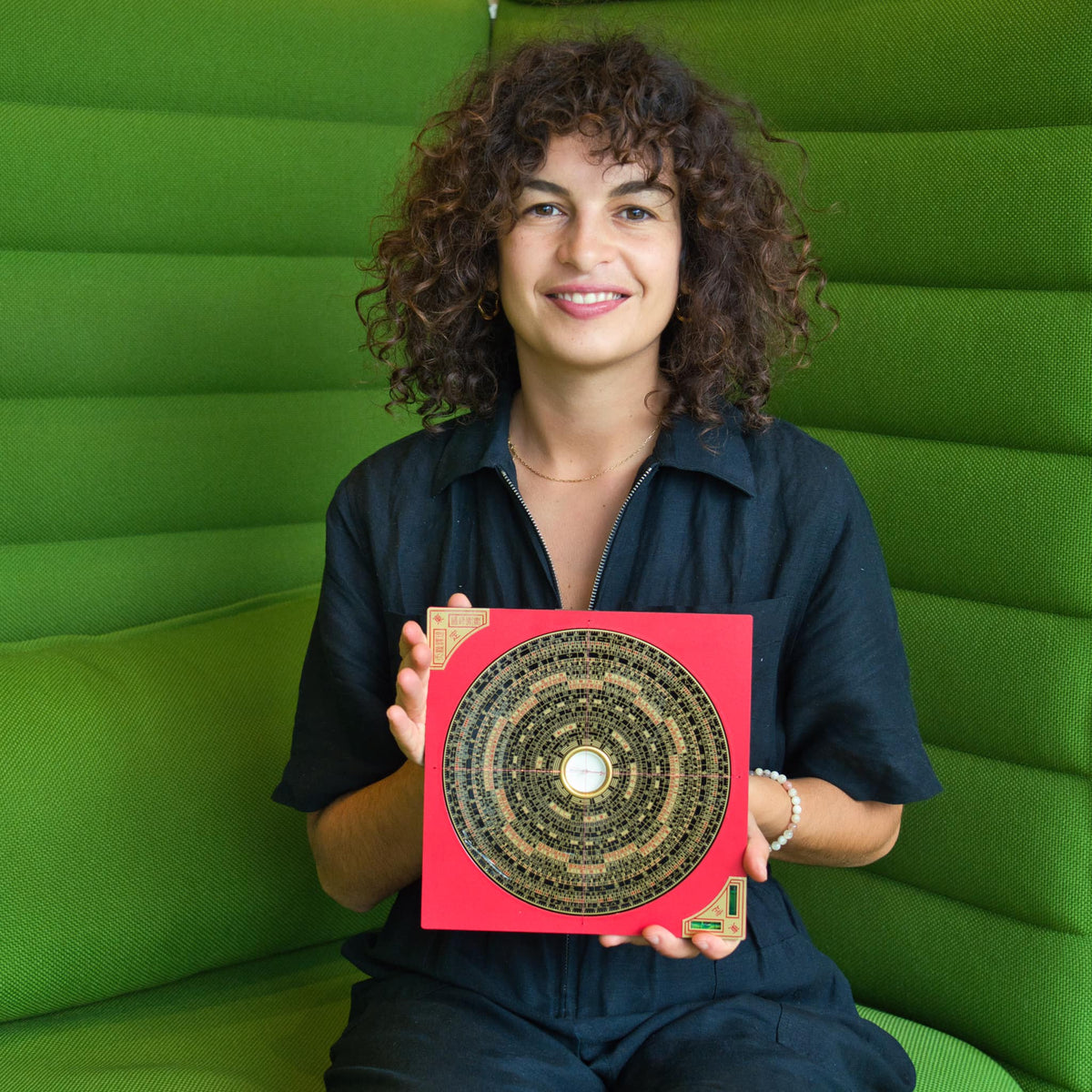
- For Feng Shui experts familiar with the formulas of the 8 Houses, it might be useful to choose a personal good area.
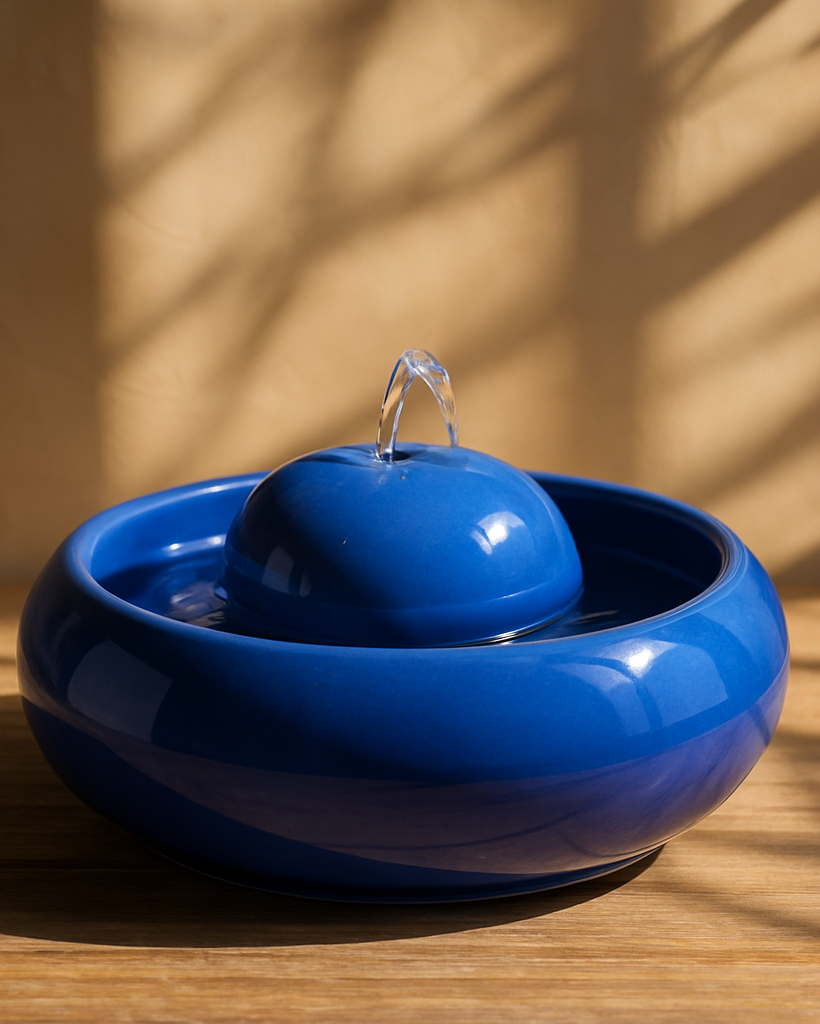
- To vitalize your altar and breathe life into it, you can place fresh flowers, small bowls of water or candles, and incense sticks. These elements not only bring color and fragrance into your room but also serve to create a peaceful and harmonious atmosphere.
- Incense tools are consciously used to honor the respective deities and to banish negative energies. The choice of incense can vary depending on personal preference and spiritual practice, with traditional scents such as sandalwood, frankincense, or sage often used.
What elements does the altar need?
The elements that make up an altar can vary depending on tradition and personal preferences. However, some basic elements used in many traditions include:
- A light aspect: This can be a candle or an oil lamp, symbolizing light and enlightenment.
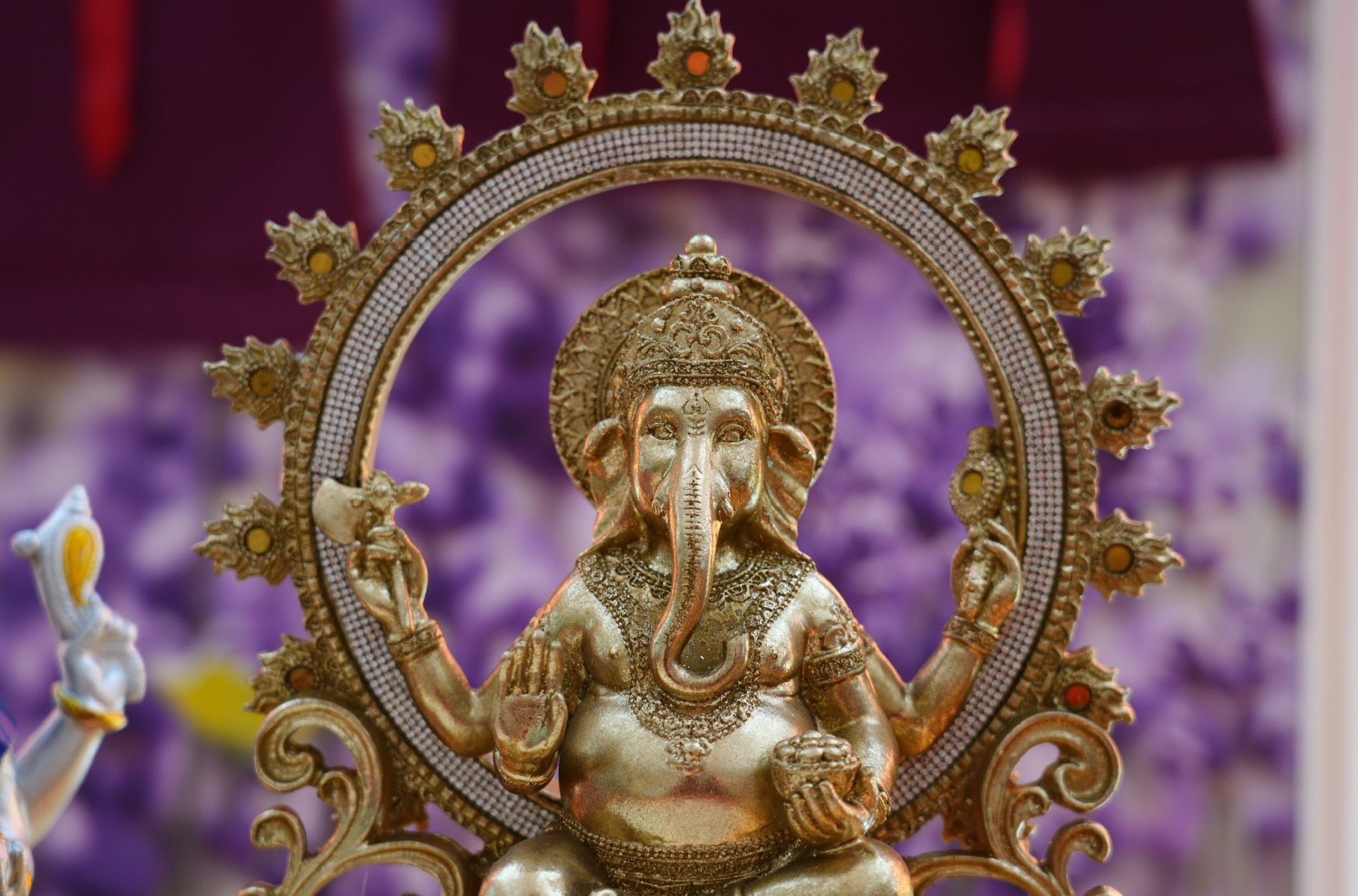
- Statues or images of deities: Often, a Ganesha, Tara, or a Buddha are placed, representing various aspects such as abundance, finances, and health.
- Incense sticks or an incense burner: Incense is often used to create a peaceful atmosphere and to energetically cleanse the space.
- Plants: Flowers such as orchids, bring freshness and vitality into the room and symbolize life and growth.
- Symmetry and aesthetics: The entire setup of the altar should be as symmetrical and aesthetically pleasing as possible to promote harmonious and balanced energy.
- A stone: A stone, preferably rose quartz or rock crystal, can also be part of the altar and stands for stability, love, and purity.
- Lotus flower: The lotus flower is a symbol of purity and spiritual enlightenment. It can be placed on the altar to support spiritual practice and promote purity of mind.
By integrating these elements into your altar and caring for it with diligence and mindfulness, you can create a space for spiritual practice and inner contemplation that brings you peace, inspiration, and harmony.
How do I care for my altar?
The altar is not a museum piece, but a place of vitality, prayer, and worship. Therefore, it should be cleaned regularly. This includes removing dust and dirt and replacing wilted flowers. Once a year, the altar can also be thoroughly cleaned by energetically smudging it with incense or sage.
Can I design my altar according to my own ideas?
Yes, the altar can be designed according to your own ideas. However, it is important to be aware of what qualities you want to have on the altar and what significance they have for you. Although there is room for creativity and individuality, it is important that the altar does not become too cluttered, but remains a place of concentration and meditation.
When designing your own altar, you can choose elements that match your personal preferences. And contribute to calming the mind and opening the heart.
How is an altar built?
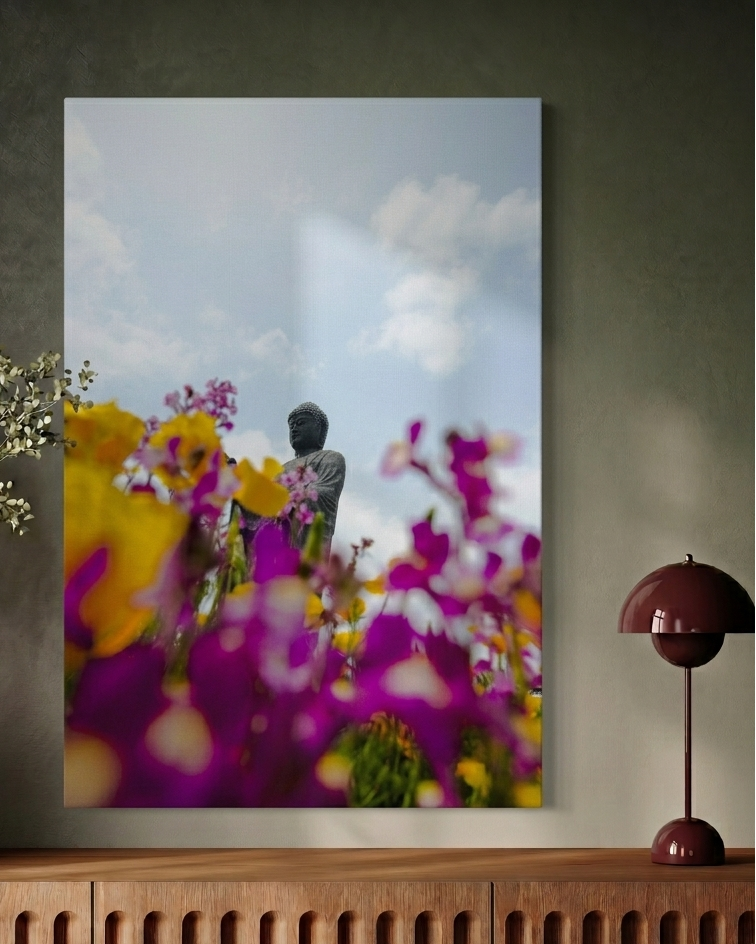
House altars can be very simple and consist of small, elevated structures made of wood or stone, possibly decorated with embellishments and a beautiful cloth. Feng Shui pictures or thangkas can also hang on the walls to complement the space around the altar and enhance the spiritual atmosphere.
By designing your altar according to your own ideas and filling it with personal symbols and elements, you can create a place of peace and inspiration.
Is there an inauguration ritual?
A smudging ritual can be a very good inauguration ritual to release the old and welcome the new.
What a Feng Shui altar looks like in the old tradition
In Europe, it is not common to place an altar in the house, whereas this tradition continues in Asia to this day. A traditional altar is not only dedicated to deities and statues but was also used to honor one's ancestors. The altar held high esteem in the house and was built according to old tradition opposite the main entrance. This reminded visitors to the house and the family itself of their ancestral line.
Only at a later time were statues of deities added, but traditionally the altar was exclusively dedicated to one's own ancestors.
The Feng Shui Altar: A Space of Reverence, Concentration, and Connection
A Feng Shui altar is more than just a decorative element in our homes - it is a place of reverence, concentration, and connection. From ancient traditions in China to modern practices around the world, the altar remains a symbol of the connection between past, present, and future.
By designing an altar according to Feng Shui principles, we can not only create a space of calm and harmony but also establish a deeper connection to ourselves and our spiritual practice.
If we take the time to erect an altar in our home and care for it thoughtfully, we can create a place of inspiration and peace that supports us in times of challenge and reminds us to live our inner values. In the depths of our hearts and in the silence of our altar, we often find the answers we seek.
Read more
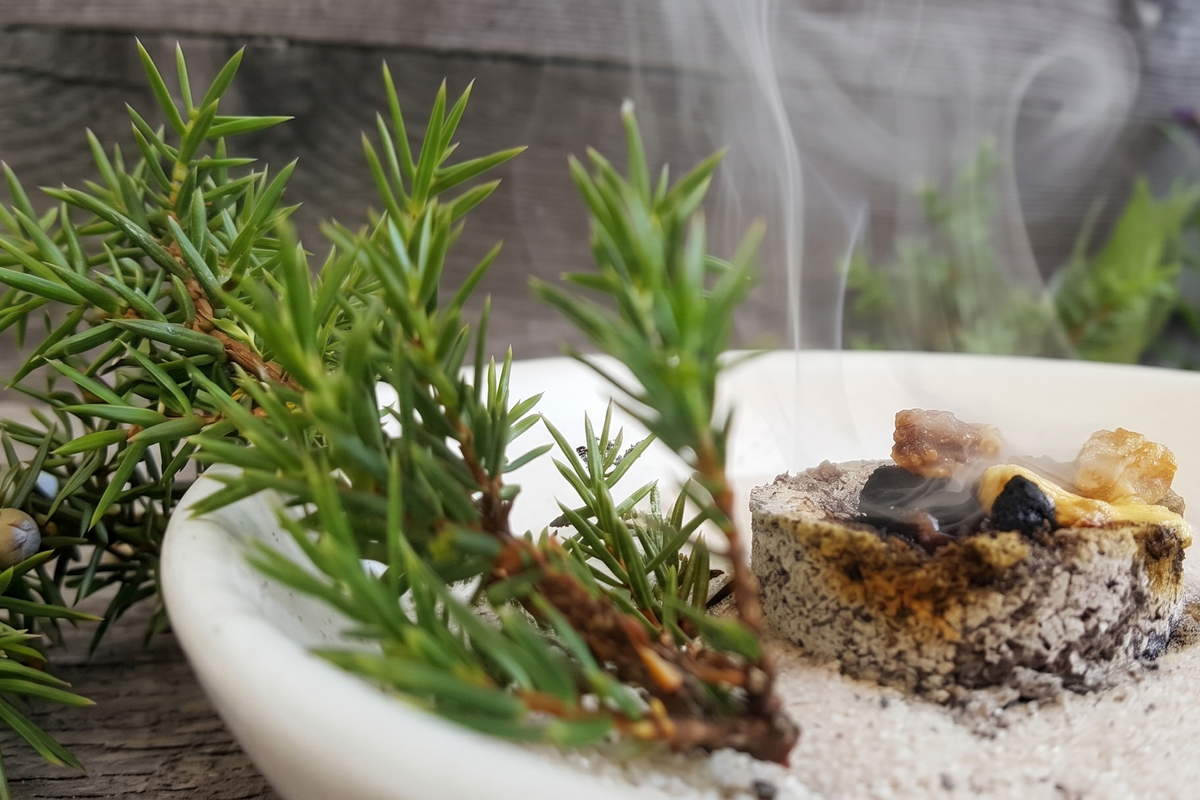
Smudging your living space is powerful and effective! Imagine the smoke rising from your incense having the power to cleanse your space of negative energies. People have alwa...
We live in a time that demands a lot from us, a time that costs strength and often drains energy. I constantly hear from people who feel burned out, who find it difficult to find their inner balanc...